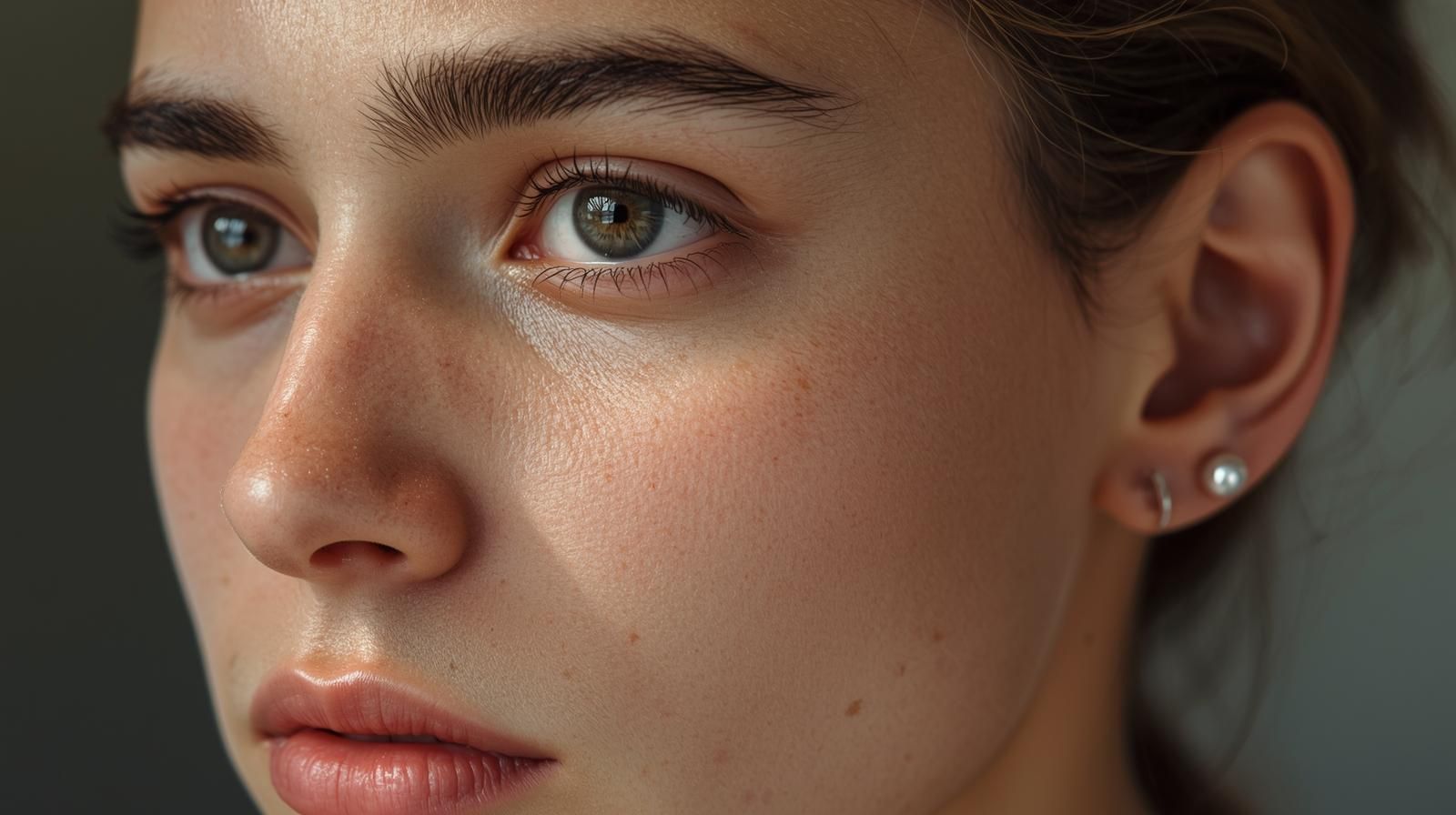
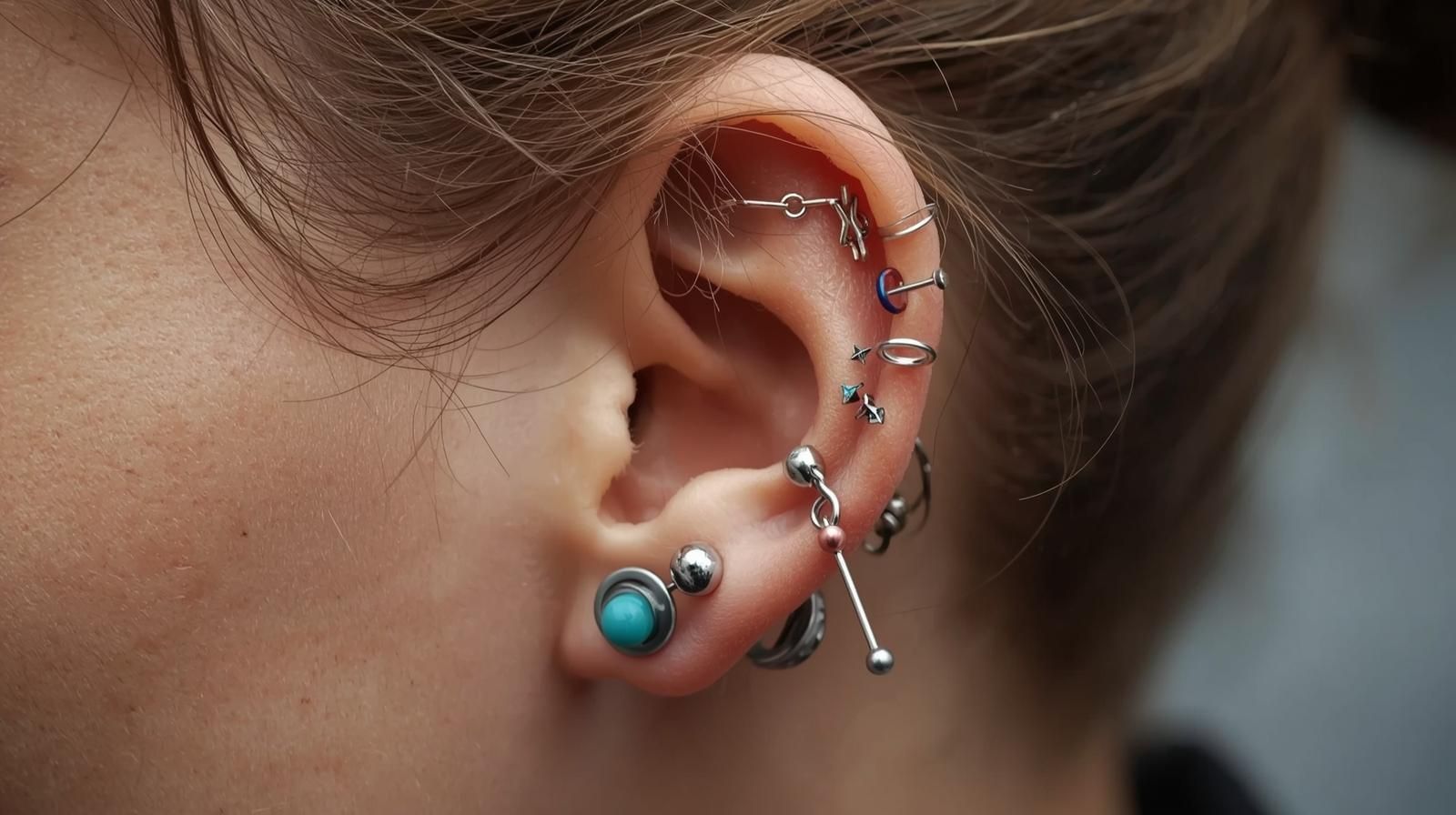
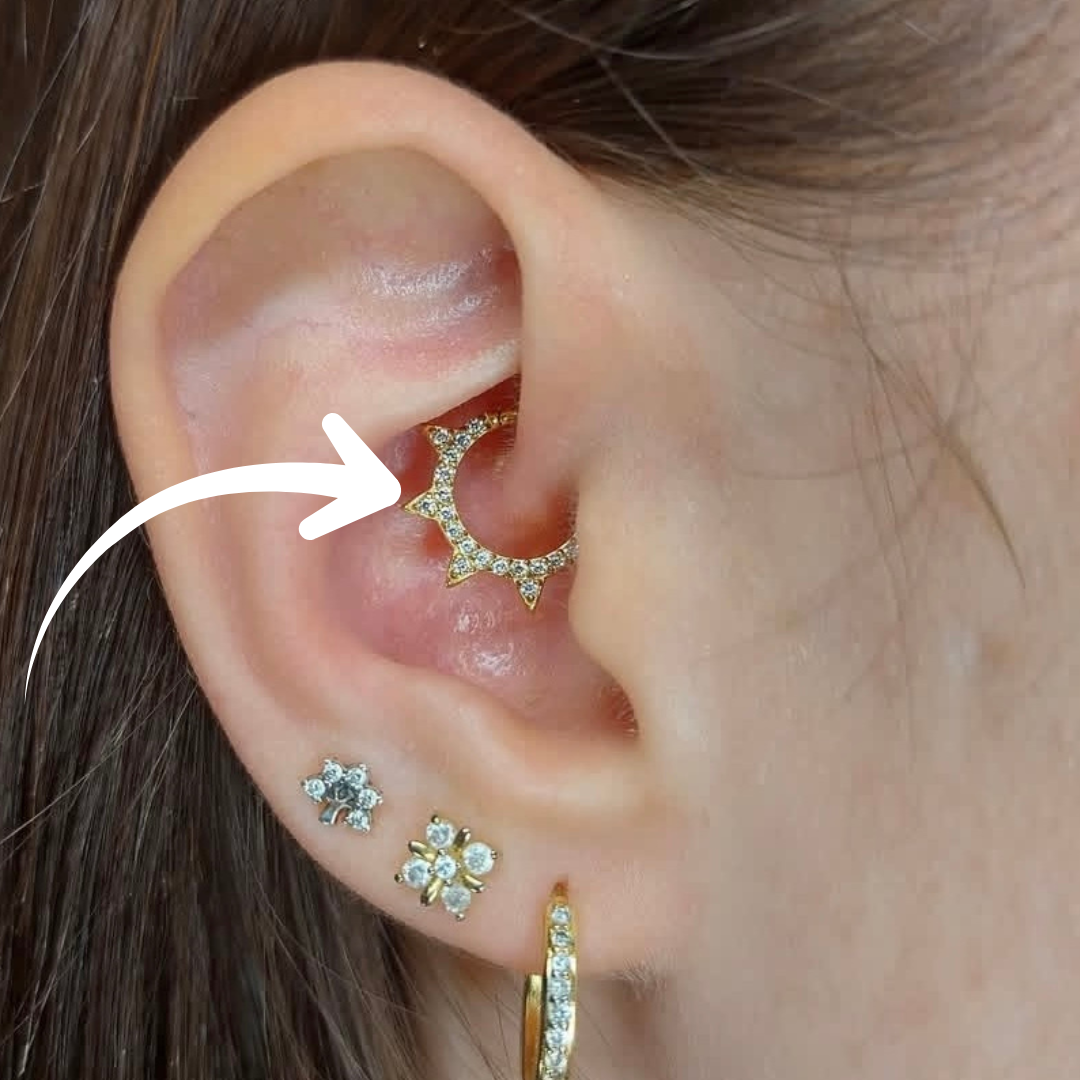
A helix piercing passes through the cartilage around the outer rim of the ear. It can sit high on the rim or lower down, depending on the shape of your ear and the look you want. A single stud, a small ring after healing, or several spaced placements can create quite different results.
Already deciding where to have it done? See our helix piercing in Dublin: price, suitability and booking page for the practical details of visiting Impulse.
Helix piercing: plan your placement and protect it
Explore the outer ear’s styling options with a care routine that fits your life.
Standard helix
A placement through the outer cartilage rim of the ear.
Forward helix
A placement near the front root of the helix, closer to the face.
Single or curated grouping
Discuss spacing and anatomy before planning double, triple or other combinations.
Choose a suitable fit
The initial jewellery must suit the placement and accommodate swelling.
Protect from pressure
Avoid sleeping directly on the piercing and watch for hair, hats and headphone snags.
Give healing time
Keep aftercare gentle and ask your piercer when jewellery changes are appropriate.
Impulse BioWorks & Piercing · Temple Bar, Dublin · impulsepiercing.ie
Further guidance: Association of Professional Piercers · Association of Professional Piercers
Standard, forward, double and triple helix: what is the difference?
- Standard helix: a placement along the outer cartilage rim.
- Forward helix: a placement at the front root of that rim, nearer the face.
- Double or triple helix: two or three separate placements, usually arranged along the same rim.
These names describe the location or number of piercings. They do not identify a single jewellery size. If you are comparing the front and outer ear, our forward helix appointment page explains that service separately.
How do you choose the placement?
Start with the result you would like to wear once healed. A small isolated gem, a group of decorative ends and a close-fitting ring need different amounts of space. Bring a reference photograph, then ask which parts of the design work with your ear.
Look at the marking from the front and side before deciding. Think about existing lobe jewellery and any future additions. An arrangement can be deliberately asymmetrical; matching every piercing on both ears is an aesthetic choice, not a requirement.
Is a stud or hoop better?
A straight post is commonly used for a new helix. If a ring is your eventual goal, mention it before placement because the angle and position can affect how it sits. The small decorative end you see is only one part of the jewellery; the post behind it also needs to fit.
A photograph of a healed hoop does not show what the wearer started with. Ask your piercer which initial piece is appropriate and when its fit should be reviewed. Infinite Body's professional helix guide explains this distinction.
How long does a helix piercing take to heal?
Think in months. Professional healing estimates place ear cartilage at around six months to a year, with individual variation. A comfortable-looking surface alone does not establish that a piercing is ready for a jewellery change.
Keep a note of your piercing date, the jewellery fitted and any planned review. That gives your piercer useful context if you later ask about a ring or a shorter post.
Can you sleep on it or wear headphones?
Avoid direct pressure on healing cartilage and unnecessary jewellery movement, following Association of Professional Piercers aftercare guidance. Consider which side you normally sleep on before choosing an ear.
Headphone fit matters more than the label “over-ear” or “in-ear”. Check where the actual device touches your ear. Include helmets, glasses arms, hats and hair styling in the conversation if they are part of your daily routine.
Questions worth asking before deciding
- Will this position work with the jewellery I hope to wear later?
- Would one placement or a staged arrangement make more sense?
- When should I return for a fit check?
- What should I change about my usual earwear while it heals?
For current pricing, the studio location and your next step, plan and book a helix piercing at Impulse in Dublin.