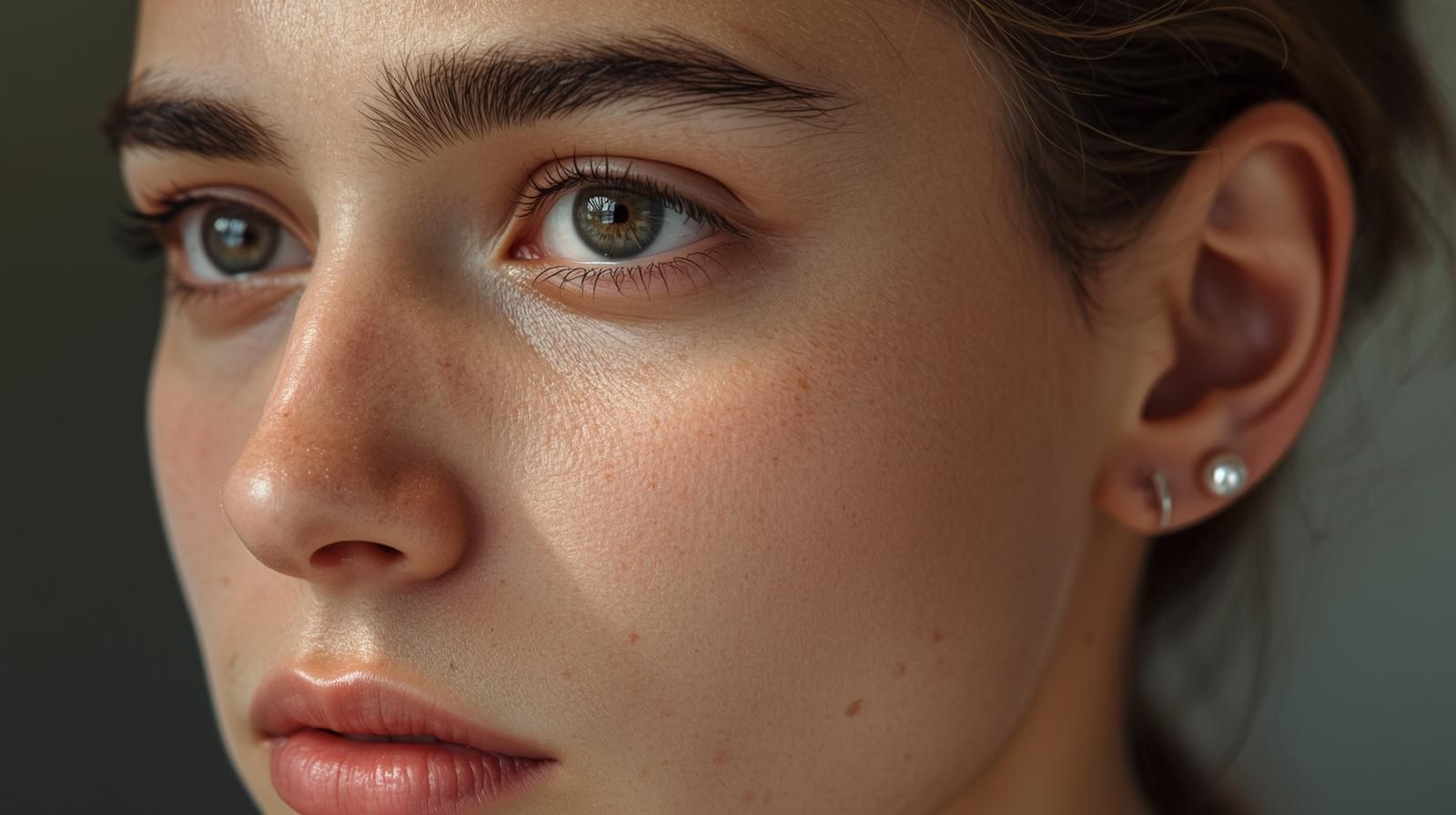
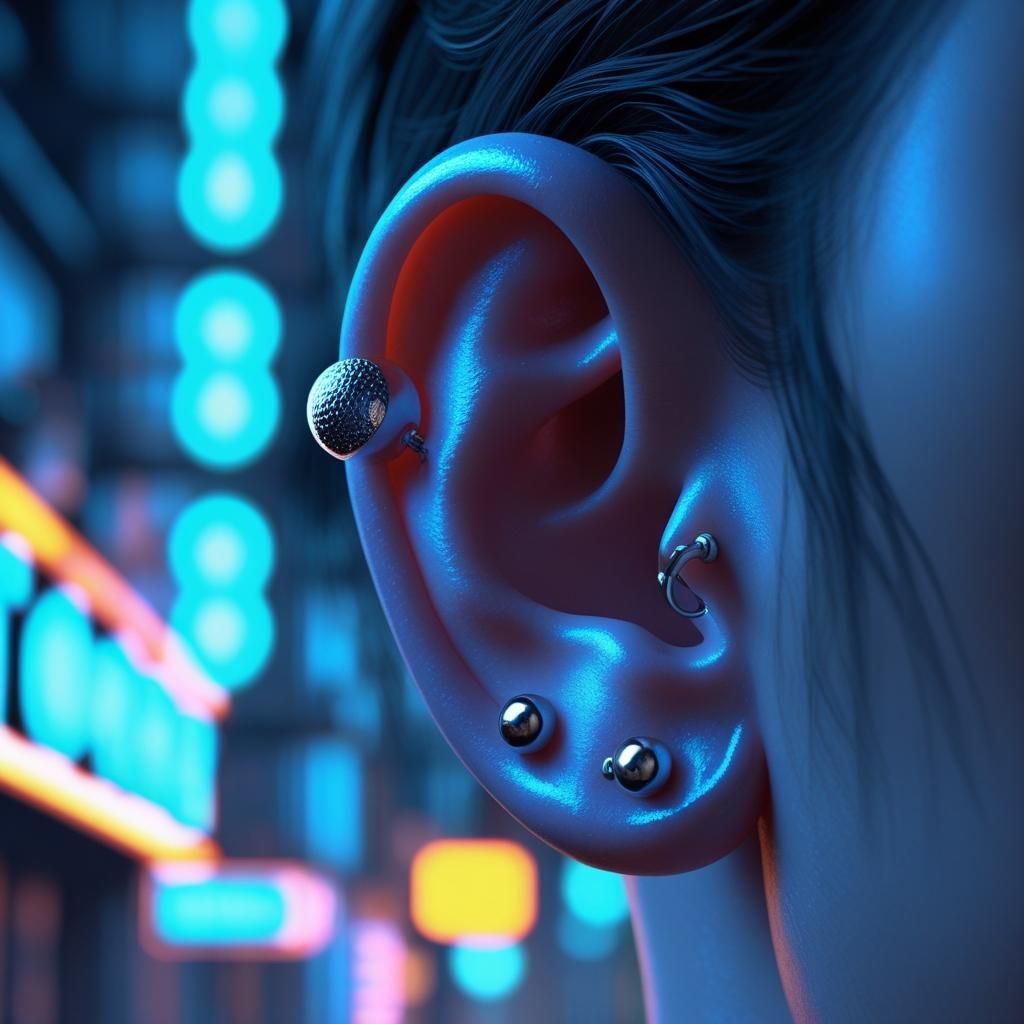
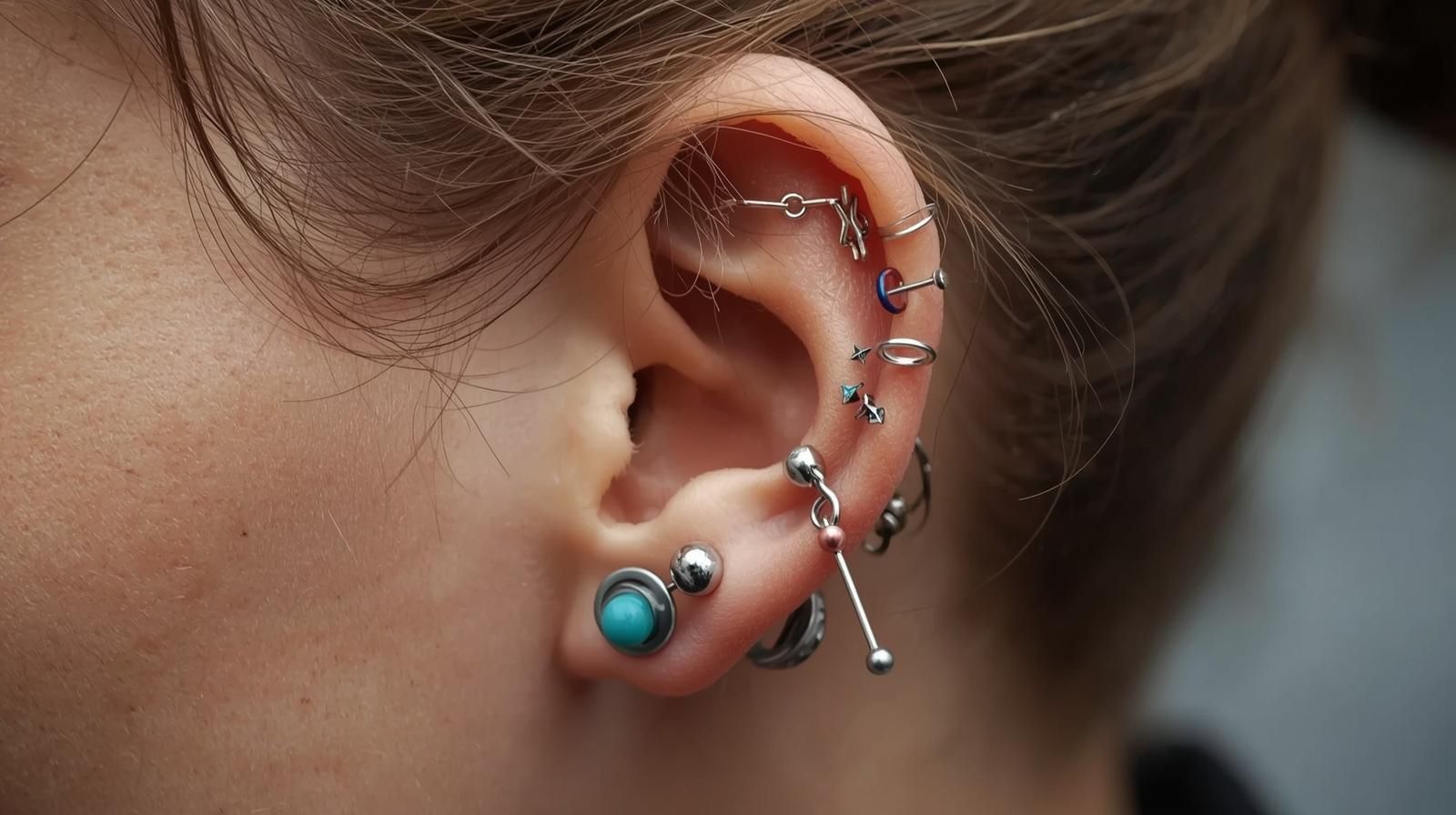
A rook piercing passes vertically through a fold of cartilage in the upper inner ear, within the antihelix. It sits above the tragus and behind the forward helix. Its two visible jewellery ends make a different feature from a stud placed on the outer rim.
Looking for the appointment details? Our rook piercing service in Dublin explains the current price, suitability discussion and booking options.
Rook piercing: a guide to the inner ear ridge
A cartilage placement shaped by your individual ear anatomy.
Inner cartilage fold
The rook sits in the upper inner fold of the ear, within the antihelix.
Assess the ridge
Your piercer checks whether the fold has suitable shape and space for this placement.
Fit the jewellery
Discuss suitable jewellery shape, size and a verified material such as implant-grade titanium.
Protect from pressure
Avoid sleeping on the piercing and check whether headphones or headwear press against it.
Allow time to heal
Cartilage healing is individual. A comfortable surface does not always mean complete healing.
Plan fit checks
Ask your piercer to review the jewellery before downsizing or making a style change.
Impulse BioWorks & Piercing · Temple Bar, Dublin · impulsepiercing.ie
Further guidance: Association of Professional Piercers · Association of Professional Piercers
Rook, daith or helix: how do you tell them apart?
- Rook: a vertical placement through the inner cartilage ridge.
- Daith: a placement through the smaller fold closer to the ear canal.
- Helix: a placement along the outer cartilage rim.
When comparing photographs, look at the tissue the jewellery passes through rather than the decorative end alone. A similar gem can appear in several different placements. Our ear piercing names guide helps put them in context.
Does everyone have suitable rook anatomy?
The fold needs to be assessed in person. Its shape and available space affect how jewellery can sit, and one ear may differ from the other. Ask your piercer to explain the proposed position using a mirror or a marked photograph.
If the classic placement is unsuitable, discuss the appearance you hoped to achieve. That gives the piercer a useful starting point for alternatives without forcing a particular piercing into a space that does not support it.
What jewellery is used?
A curved barbell is commonly used initially, while a ring may be an option after healing. Infinite Body's rook guide explains the placement and these jewellery choices.
Think about both visible ends when choosing a design. Do you want a balanced pair, a larger upper detail or a piece that blends with existing lobe jewellery? Ask what fits at the start, rather than selecting purely from photographs of healed piercings.
Material and fit also matter. The Association of Professional Piercers' jewellery guide explains why dimensions and documented material standards are more useful than a vague “hypoallergenic” label.
How long does a rook piercing take to heal?
Allow six months or longer as a general estimate, with individual variation. A review appointment can help distinguish progress from readiness to change the jewellery; a comfortable-looking surface is not the whole picture.
Ask your piercer when to return and keep the details of the original jewellery. At the review, explain whether you are considering a different style or are concerned about the current fit.
What about sleep, headphones and hair?
Choose the ear with your usual routine in mind. Think about the side you sleep on, the ear you use for calls and where headphones or a helmet sit. Hair styling and pulling clothes over your head are also worth considering when planning a new ear piercing.
Bring these details to the consultation. The aim is to make the placement practical for your day, as well as choosing jewellery you enjoy looking at.
Does a rook piercing hurt?
People describe it differently, so a fixed pain score is not a reliable promise. Tell your piercer if you want each step explained, need a pause or have concerns from a previous appointment. You can ask questions before deciding to proceed.
For current pricing and the next step, view rook piercing appointments at Impulse in Dublin.