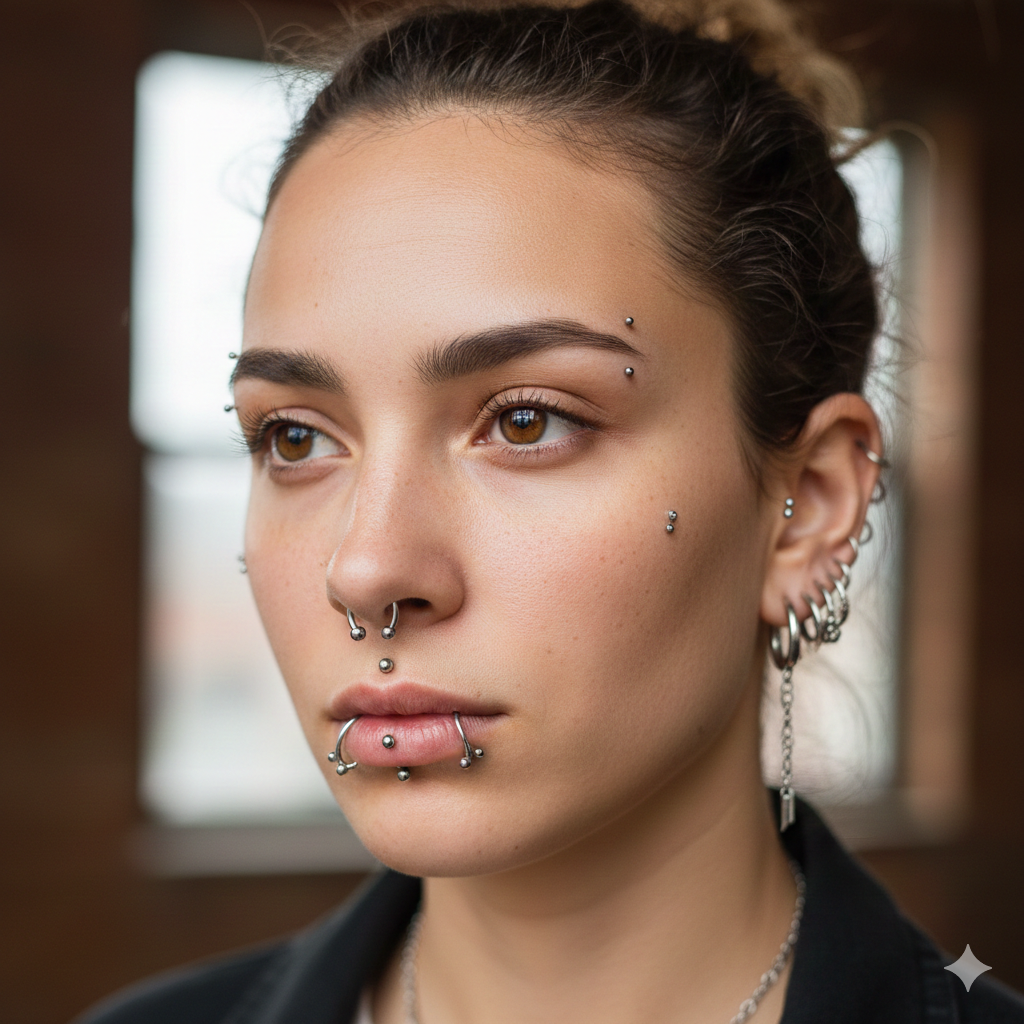
Sean Dubss - The Leading Piercer In Dublin
TL;DR
• Sean Dubss, with over 15 years' experience, founded Impulse Piercing in 2024 in the same Dublin unit where his career began.
• Impulse Piercing prioritises safety, sterilisation, quality jewellery and calm, thorough client communication throughout every procedure.
• The studio also offers RFID bio-modification implants, a rare speciality service few other Dublin studios currently provide.
Find a professional piecer
Finding a piercer you can genuinely trust makes all the difference between a piercing you love and one you regret. In a city with no shortage of studios, Sean Dubss has built a reputation that stands apart—one grounded in nearly two decades of hands-on experience, technical skill, and a genuine commitment to safety. As the founder of Impulse Piercing, Sean has created a studio that reflects everything he's learned throughout his career, offering Dublin residents and visitors alike a piercing experience that prioritises quality above all else.
Dublin's piercing scene has grown considerably over the past decade, with new studios opening regularly and a wide range of piercers offering their services across the city. Amid this expanding market, distinguishing genuine expertise from newer, less established practitioners can be challenging for clients. This is precisely where reputation, longevity, and demonstrable skill become invaluable indicators of quality. With social media making it easier than ever for studios to present a polished image regardless of actual competence, prospective clients are increasingly required to look beyond glossy marketing and investigate the substance behind a piercer's claims—their training history, their client reviews over time, and their willingness to answer detailed technical questions before any needle touches skin.
This blog post explores who Sean Dubss is, the story behind Impulse Piercing, and why he's widely regarded as one of Dublin's most trusted names in body piercing.
Who Is Sean Dubss?
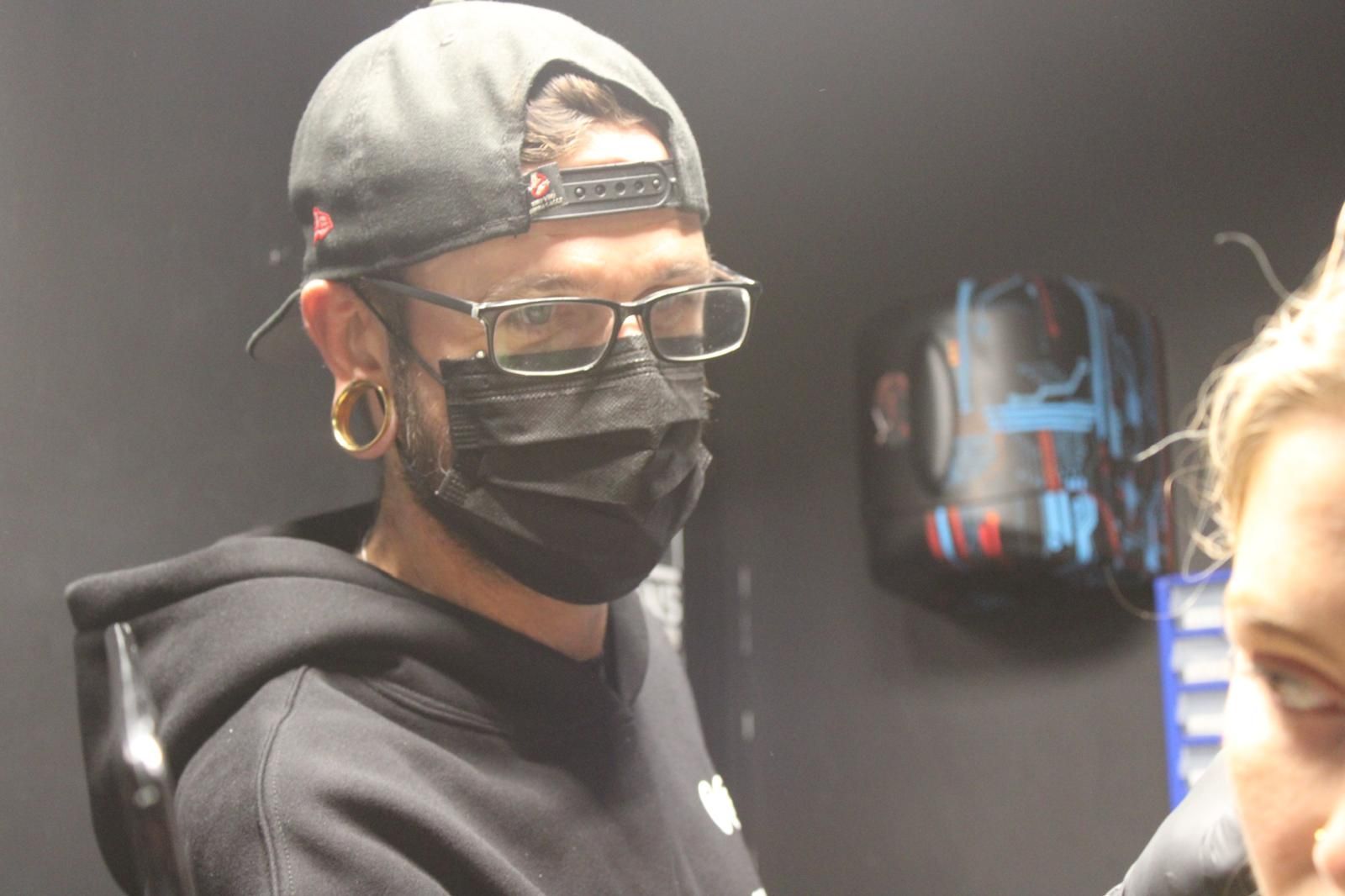
Sean Dubss is a professional piercer with over 15 years of experience working within Dublin's piercing industry. Throughout his career, he has been employed at some of the city's most well-established and respected studios, where he honed his craft and developed the technical precision that now defines his work. This journey through multiple studios exposed him to varied working environments, different studio philosophies, and diverse client bases, each contributing something valuable to his overall skill set.
Working across several respected establishments also meant Sean had the opportunity to learn from other experienced piercers, absorbing best practices while developing his own distinct methodology. This kind of cross-studio experience is relatively rare and speaks to a career built on genuine dedication rather than simply settling into one comfortable position early on. Many piercers, once they find a stable position, remain there for the duration of their career without ever testing their skills against different studio standards, different client demographics, or different mentors. Sean's willingness to move between studios throughout his early career reflects a deliberate strategy of skill accumulation rather than mere job-hopping, and it's this deliberate approach to professional development that many industry peers point to when explaining his reputation.
What sets Sean apart isn't just his longevity in the industry—it's the consistency of his approach. Clients and colleagues alike describe him as calm, professional, and approachable, qualities that matter enormously in an industry where trust and comfort are just as important as technical ability. Piercing can be a nerve-wracking experience for many people, and having a piercer who puts clients at ease can transform the entire process. For someone visiting a studio for their very first piercing, this reassurance often makes the difference between a positive first experience and one that discourages them from returning for future body modification work. First impressions in this industry tend to be lasting ones; a client who has a frightening or uncomfortable initial experience may avoid piercing studios altogether for years afterwards, regardless of how much they may have wanted additional piercings.
Over the years, Sean has pierced thousands of clients across a huge range of placements, from simple lobe piercings to more complex cartilage and surface work. This breadth of experience means he's encountered nearly every anatomical variation and challenge a piercer might face, giving him the insight needed to recommend the safest and most suitable options for each individual. Whether working with unusually thick or thin cartilage, navigating scar tissue from previous piercings, or advising on placements for anatomy that doesn't easily accommodate standard techniques, Sean's cumulative experience means fewer surprises and better outcomes for his clients. This kind of pattern recognition, built up over thousands of individual cases, allows him to spot potential problems before they arise—identifying, for instance, a client's ear anatomy that may be prone to keloid formation, or navel anatomy unlikely to support standard jewellery without significant migration risk.
This variety of practice has also given him particular insight into more technically demanding placements, such as industrial piercings, daith piercings, and surface anchors, all of which require a more nuanced understanding of anatomy and healing than straightforward lobe work. Industrial piercings, for example, involve a single piece of jewellery passing through two separate piercing points, meaning both holes must align with genuine precision—a task that becomes considerably more difficult on ears with irregular cartilage ridges. Daith piercings, which pass through the innermost cartilage fold near the ear canal, require careful consideration of the curve and depth of that particular fold, which varies enormously between individuals. Surface anchors, meanwhile, sit apart from traditional piercings entirely, as they involve implanting jewellery beneath the skin's surface rather than passing through a channel, demanding an entirely different set of technical skills and a far more considered approach to placement, given the higher risk of rejection associated with this style of body modification.
The Story Behind Impulse Piercing
Every studio has an origin story, but few are as fitting as the one behind Impulse Piercing. When Sean first moved to Ireland many years ago, one of his earliest jobs in the piercing industry was at a studio located in the very unit that Impulse Piercing now occupies. At the time, this was simply another step in building his career—a new city, a new studio, and the beginning of what would become a long professional journey within Dublin's piercing community. Starting out in an unfamiliar city, without an established local reputation or client base, requires a particular kind of resilience, and this early period undoubtedly shaped much of Sean's later approach to client care, having personally experienced what it's like to be the newcomer trying to build trust from nothing.
After years of working within the industry, Sean took some time away—a break that many professionals in creative and hands-on trades find valuable for perspective and renewal. Such breaks are not uncommon within skilled trades that demand sustained precision and emotional engagement with clients day after day. Time away often allows practitioners to return with renewed enthusiasm and a clearer sense of what truly matters in their work. The physical demands of piercing work, which often involves long hours standing, repetitive precise hand movements, and sustained concentration during procedures, can accumulate over years, making periods of rest genuinely valuable for maintaining both technical sharpness and enthusiasm for the craft.
When he eventually decided to return to piercing, his passion for the craft had only deepened. He approached the industry with fresh eyes, a clearer sense of purpose, and an even stronger commitment to doing things properly. This period of reflection appears to have shaped much of the philosophy that now underpins Impulse Piercing—an emphasis on quality over quantity, and genuine care over simply processing as many clients as possible. Many studios, driven by commercial pressures, prioritise appointment volume over thoroughness, rushing consultations and cutting corners on aftercare guidance in order to maximise daily client numbers. Sean's time away appears to have reinforced his rejection of this model in favour of an approach where each client receives the attention their individual circumstances warrant, even if that means seeing fewer people each day.
As fate would have it, the opportunity arose to lease that same unit where his Dublin piercing career had first begun. For Sean, this felt like more than coincidence. It represented a full-circle moment—a chance to return to where it all started, but this time as the owner of his own studio, built entirely around his own standards and values. Rather than working within someone else's established systems and limitations, Sean now had complete control over every aspect of the client experience, from studio hygiene protocols to the specific jewellery brands stocked. This level of control extends to seemingly minor details that nonetheless shape the overall client experience—the specific autoclave equipment used for sterilisation, the layout of the studio to ensure client privacy during consultations, and even the specific numbing options offered for clients particularly anxious about pain.
In 2024, Impulse Piercing officially opened its doors. The studio represents years of accumulated knowledge, refined technique, and a clear vision for what a piercing studio should be: safe, professional, and genuinely welcoming. For long-term Dublin residents familiar with the area's piercing history, there's something particularly meaningful about seeing a studio return to its roots under new, more personal ownership. Local clients who remember the unit's earlier iteration often comment on the continuity this represents—a tangible link between Dublin's piercing history and its present, filtered through the lens of someone who genuinely understands what the community values.
What Makes Impulse Piercing Different
Nearly Two Decades of Expertise
Experience matters enormously in piercing. Unlike many cosmetic procedures, piercing involves working with unique anatomy, varying skin types, and different healing patterns. A piercer with 15-plus years of experience has seen and adapted to far more variation than someone newer to the trade. Sean's extensive background means he can quickly assess suitability for different piercings, anticipate potential complications, and adjust his technique accordingly.
For example, a client with particularly thin ear cartilage may require a different approach to needle angle and jewellery gauge than someone with thicker, more robust cartilage. Similarly, navel piercings vary significantly depending on individual anatomy, and an experienced piercer can quickly identify whether a client's anatomy is suitable for the procedure at all, potentially saving them from a piercing likely to migrate or reject. This kind of assessment isn't something that can be taught purely through theoretical training; it develops through repeated exposure to real anatomical variation over years of practical work, and mistakes made early in a piercer's career often become the foundation for the more refined judgement they develop later.
This depth of knowledge also extends to aftercare advice. Piercings don't end the moment the needle leaves the skin—proper healing depends heavily on the guidance given afterwards. Sean's experience allows him to provide aftercare recommendations tailored to each client's specific piercing and lifestyle, rather than generic advice that doesn't account for individual circumstances. A client who swims regularly, for instance, requires different guidance than someone who works in a dusty environment or has particularly sensitive skin prone to irritation. Occupational factors play a significant role here too—someone working in healthcare, where frequent hand-washing and glove use is required, may need different guidance for a hand or finger piercing than someone working in an office environment, while athletes engaging in contact sports may need to consider temporary jewellery removal or protective coverings during training and competition to avoid trauma to healing piercings.
A Calm and Professional Approach
Anxiety is common before getting pierced, regardless of how experienced someone might be with body modification. Even clients with multiple existing piercings can feel nervous before a new procedure, particularly if they're considering a more unusual or painful placement. Sean's approach has always centred on making clients feel comfortable and informed throughout the entire process. Before any piercing takes place, he ensures clients understand exactly what to expect, addressing questions and concerns without rushing the conversation.
This might include explaining the specific sensation associated with a particular piercing, discussing realistic healing timelines, or simply talking through the mechanics of the procedure itself to demystify what can feel like an intimidating process for newcomers. Some clients arrive with concerns based on misinformation gathered online, and part of Sean's role involves gently correcting these misconceptions with accurate, experience-based information. Online forums and social media are often rife with exaggerated pain descriptions, unrealistic healing timeframes, or outright incorrect aftercare advice, and separating genuine guidance from misinformation has become an increasingly important part of a professional piercer's role. Sean's approach involves patiently working through these concerns, drawing on his own extensive practical experience rather than relying on secondhand information or outdated industry practices.
This calm demeanour isn't just about client comfort—it also contributes to better outcomes. A relaxed client is generally easier to pierce accurately, as tension and nervousness can sometimes make the process more difficult. Muscle tension can affect positioning, and an anxious client may inadvertently move during the procedure, increasing the risk of a poorly placed piercing. Sean's ability to put people at ease has become one of the defining features of his professional reputation, and something clients frequently mention when recommending him to friends and family. Techniques such as controlled breathing guidance, clear countdowns before the actual piercing, and distraction conversation during particularly sensitive procedures all form part of the practical toolkit experienced piercers develop over time to manage client anxiety effectively.
Commitment to Safety and Hygiene
Safety standards in piercing are non-negotiable, and this is an area where experience and diligence go hand in hand. Impulse Piercing maintains strict sterilisation protocols, uses appropriate single-use needles, and follows industry best practices for cross-contamination prevention. This includes proper autoclave sterilisation of reusable equipment, thorough surface disinfection between clients, and appropriate use of personal protective equipment throughout every procedure.
Given the potential health risks associated with poor piercing hygiene—including infection, allergic reactions, and improper healing—choosing a studio with rigorous safety standards is essential. In severe cases, poor hygiene practices during piercing can lead to serious bloodborne infections, making sterilisation protocols an absolutely critical consideration when selecting a studio. Clients are well advised to ask any prospective studio direct questions about their sterilisation process, including how frequently autoclaves are tested for efficacy (typically through spore testing conducted at regular intervals), whether needles are genuinely single-use and disposed of through appropriate medical waste channels, and what specific protocols are followed between clients to prevent cross-contamination of surfaces and equipment.
Sean's long career has given him a thorough understanding of these protocols, and he applies them consistently to every client, regardless of how simple or complex the piercing might be. This consistency matters; safety standards should never be relaxed simply because a piercing is considered routine, as even lobe piercings carry infection risks if hygiene protocols aren't properly followed. It's worth noting that some of the most severe piercing-related complications historically reported have stemmed not from complex procedures but from seemingly simple lobe piercings performed with inadequate hygiene standards, underscoring the importance of consistent protocol application regardless of perceived procedure simplicity.
Quality Jewellery and Materials
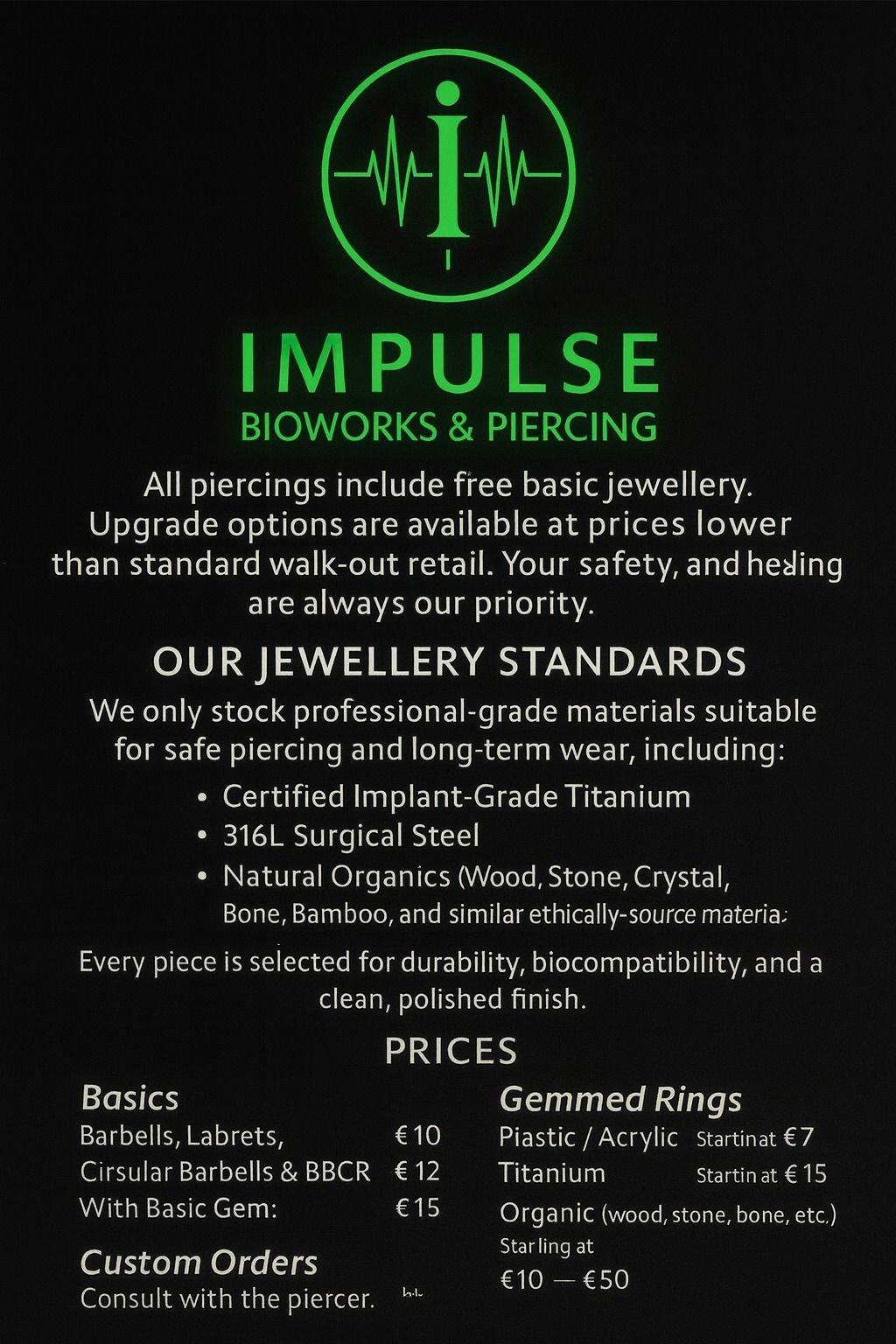
The materials used in piercing significantly influence healing outcomes. Impulse Piercing uses high-quality jewellery designed to minimise irritation and support proper healing. This is particularly important for initial piercings, where the wrong material can lead to prolonged healing times, allergic reactions, or complications requiring the piercing to be removed altogether.
Nickel sensitivity, for example, is relatively common and can cause significant irritation if lower-quality jewellery containing nickel is used during initial healing. Similarly, jewellery with poorly finished surfaces can harbour bacteria or cause micro-tearing within the piercing channel, both of which can delay healing considerably. Even jewellery marketed as "surgical steel" can vary considerably in quality, with some cheaper alternatives containing higher nickel content than genuinely implant-grade material, making it essential to source jewellery from reputable suppliers who can verify material composition and quality standards.
Sean's experience means he can advise clients on which materials suit their skin sensitivities and lifestyle, whether that's titanium, surgical steel, or other biocompatible options. Titanium, for instance, is often recommended for clients with known metal sensitivities due to its excellent biocompatibility, while surgical steel remains a popular choice for its durability and cost-effectiveness for clients without particular sensitivities. Beyond material selection, jewellery gauge and length also play a critical role in healing—jewellery that's too tight can restrict swelling during initial healing, causing pain and delayed recovery, while jewellery that's too loose can lead to increased movement within the piercing channel, potentially prolonging healing or increasing the risk of migration. Sean's careful measurement and consideration of these factors during the initial fitting stage reflects the kind of attention to detail that distinguishes experienced practitioners from those newer to the trade.
Bio-Modifications: RFID Implants at Impulse Piercing
One of the more distinctive offerings at Impulse Piercing is Sean's work with bio-modifications, including RFID implants. This represents a growing area of body modification that goes beyond traditional piercing, blending technology with body art in genuinely innovative ways. As interest in practical, technology-integrated body modification continues to grow globally, Dublin clients increasingly want access to these services locally, rather than travelling abroad to access specialist practitioners.
What Are RFID Implants?
RFID (Radio-Frequency Identification) implants are small devices inserted beneath the skin that can store information, unlock devices, make contactless payments, or grant access to secured spaces, depending on how they're programmed. These implants have grown in popularity among people interested in practical applications of body modification, offering convenience alongside the novelty of the procedure itself.
Typically inserted in the area between the thumb and forefinger, these implants are roughly the size of a grain of rice, encased in a biocompatible glass casing designed specifically for subdermal implantation. Clients have used these implants for a variety of practical purposes, including unlocking their front door, starting their car, or storing emergency medical information accessible via smartphone scanning. Beyond these common applications, some clients have programmed their implants for workplace access control, replacing traditional key fobs or access cards, while others use them to store contact information or personal identification details, sharable simply by holding a compatible smartphone near the implant site.
Why This Matters for Dublin Clients
Offering RFID implants isn't something every studio is equipped or qualified to do. This procedure requires specialised knowledge, a thorough understanding of safe insertion techniques, and an appreciation for the unique considerations involved in implanting technology beneath the skin. Unlike traditional piercing, which creates a channel through tissue, implant procedures involve creating a small pocket beneath the skin, requiring different technical skills and heightened attention to sterile technique. The insertion process typically involves a specialised needle or small incision, followed by careful placement of the implant within the subdermal pocket, and the healing process differs considerably from traditional piercing healing, generally requiring careful monitoring for any signs of migration or rejection over the following weeks.
By offering this service, Sean positions Impulse Piercing at the forefront of body modification in Dublin, catering to clients who want more than traditional piercings. This reflects his broader approach to the trade—staying current with industry developments while maintaining the same rigorous safety standards applied to all other procedures. Very few Dublin studios currently offer this service, meaning clients interested in RFID implants previously had limited local options, often requiring travel to the UK or mainland Europe to access qualified practitioners.
For those considering an RFID implant, consultation is essential. Sean takes the time to explain the procedure thoroughly, discuss placement options, and ensure clients understand both the practical applications and the aftercare required for proper healing. This includes discussing realistic expectations around what the implant can and cannot do, as some clients arrive with expectations shaped by science fiction rather than current technological capability. It's important for prospective clients to understand, for instance, that current RFID implant technology does not include GPS tracking capability, batteries, or the ability to transmit data over long distances—dispelling these common misconceptions forms an important part of Sean's consultation process, ensuring clients make informed decisions based on accurate understanding of the technology's actual capabilities and limitations.
What to Expect When Visiting Impulse Piercing
For anyone considering a visit to Impulse Piercing, understanding the process can help ease any pre-appointment nerves. Knowing what to expect at each stage removes much of the uncertainty that contributes to pre-piercing anxiety.
Initial Consultation
Every visit typically begins with a conversation. Sean takes time to understand what the client wants, discuss suitable placement options, and address any questions about the procedure, aftercare, or healing times. This consultation stage is particularly important for first-time clients or those considering more unusual placements. During this conversation, Sean will often examine the relevant anatomy closely, checking for any factors that might influence placement decisions, such as existing scar tissue, unusual cartilage structure, or skin conditions that could affect healing.
For clients unsure exactly what they want, this consultation also serves as an opportunity to discuss options they may not have previously considered, drawing on Sean's extensive knowledge of what tends to heal well and suit different anatomical types. This might involve discussing how a particular placement will complement existing piercings, considering the overall visual balance of multiple piercings within the same area, or suggesting alternative placements better suited to a client's specific anatomy than their original request.
The Piercing Process
Throughout the piercing itself, Sean maintains clear communication, explaining each step as it happens. This transparency helps reduce anxiety and ensures clients feel informed and in control throughout the experience. Clients are typically informed before any marking, before the actual piercing takes place, and immediately afterwards, removing any element of surprise from the procedure.
This step-by-step communication also allows clients to voice any last-minute concerns or questions before the piercing is performed, ensuring they feel fully prepared and consenting throughout every stage of the process. This might include a final check of the marked placement in a mirror before proceeding, giving the client one last opportunity to request adjustments before the piercing becomes permanent.
Aftercare Guidance
Once the piercing is complete, clients receive detailed aftercare instructions tailored to their specific piercing type. This includes guidance on cleaning routines, products to avoid, signs of potential complications, and expected healing timelines. Sean's experience means this advice is practical and realistic, rather than generic guidance that doesn't account for individual healing patterns.
This might include specific advice about avoiding certain fabrics that could snag on new piercings, guidance on sleeping positions that minimise pressure on healing cartilage, or realistic expectations about the appearance of normal healing discharge versus signs of genuine infection requiring professional attention. Clients are also typically advised on appropriate saline solution use, the importance of avoiding unnecessary touching or twisting of new piercings, and guidance on when it's safe to change jewellery without risking damage to the still-healing piercing channel. For more complex placements, Sean often schedules follow-up check-ins to monitor healing progress, catching potential issues early before they develop into more significant complications.
Why Experience and Reputation Matter When Choosing a Piercer
Choosing a piercer isn't a decision to make lightly. Piercings, while often small procedures, carry real risks if performed incorrectly or in unhygienic conditions. Complications from poor piercing practices can include infection, keloid scarring, nerve damage, and prolonged healing issues. In more serious cases, poorly performed piercings have resulted in permanent scarring or the need for corrective medical intervention.
This is why reputation and experience should weigh heavily in the decision-making process. A piercer with a long-standing career, like Sean Dubss, has had years to refine their technique, understand anatomical variation, and develop protocols that minimise risk. This experience simply cannot be replicated by newer practitioners, regardless of their enthusiasm or natural aptitude. Technical proficiency in piercing develops through repeated exposure to varied client anatomy and circumstances, something that inevitably takes years to accumulate. Prospective clients seeking to evaluate a piercer's experience level might reasonably ask about their training background, how many years they've practised, and whether they hold any relevant industry certifications, though it's worth noting that practical experience often proves more valuable than certifications alone in this particular trade.
Additionally, working within Dublin's piercing scene for over 15 years means Sean has built relationships and a reputation within the local community. Word-of-mouth recommendations, repeat clients, and referrals often speak volumes about a piercer's reliability and skill—far more than marketing claims ever could. Many of Sean's current clients arrive having been referred by friends or family members who received piercings from him years earlier, a testament to the lasting trust his work inspires. This kind of intergenerational client loyalty, where parents bring their teenage children for their first piercings having had positive experiences themselves years prior, represents perhaps the strongest possible endorsement a piercer can receive.
The Importance of Choosing a Local, Established Studio
There's genuine value in supporting studios with deep roots in the local community. Impulse Piercing's connection to its physical location—the very unit where Sean's Dublin piercing journey began—adds a layer of authenticity that's difficult to manufacture. This isn't a studio built purely for commercial purposes; it's the culmination of a genuine professional journey, shaped by real experience and a clear passion for the craft.
Local studios with established histories also tend to have stronger accountability within their communities. A studio that has operated for years within the same neighbourhood, building relationships with local clients, has considerably more incentive to maintain high standards than a transient business without the same community ties. Studios with genuine local roots also tend to be more responsive to client concerns, understanding that their reputation within a relatively small, interconnected community depends heavily on consistent quality and genuine accountability when issues arise.
For clients, this translates into confidence. Knowing that the person performing your piercing has years of dedicated experience, a proven track record, and a personal investment in doing the work well provides reassurance that's hard to find elsewhere. This confidence extends beyond the piercing procedure itself, encompassing trust in aftercare advice, willingness to address complications should they arise, and overall accountability for the quality of work performed. Should any healing complications arise after a piercing, clients working with established local practitioners can typically expect straightforward access to follow-up support, rather than the uncertainty that might come with a studio lacking permanent local presence.
Summary: Why Sean Dubss Stands Out in Dublin's Piercing Scene
Sean Dubss brings a rare combination of experience, skill, and genuine care to every piercing he performs. With over 15 years working in some of Dublin's most respected studios, he has developed the technical expertise and calm professionalism that clients consistently value. The story behind Impulse Piercing—returning to the very unit where his career began—adds a personal dimension that reflects his genuine passion for the craft, rather than simply another commercial venture.
Beyond traditional piercing services, Sean's willingness to offer bio-modifications like RFID implants demonstrates his commitment to staying at the forefront of the industry, providing Dublin clients with access to innovative options alongside tried-and-tested piercing techniques. This combination of traditional expertise and forward-thinking service offerings positions Impulse Piercing uniquely within Dublin's broader body modification landscape.
For anyone in Dublin considering a new piercing—whether a straightforward lobe piercing or something more unconventional—choosing an experienced, safety-conscious professional matters enormously. Sean Dubss and Impulse Piercing offer exactly that: a studio built on genuine expertise, a calm and welcoming approach, and a clear dedication to doing piercing properly. For those seeking both traditional piercing services and access to emerging body modification technology, few Dublin studios can match the depth of experience and genuine professional dedication found at Impulse Piercing. Ultimately, whether a client is walking in for their very first lobe piercing or returning after years away from body modification to explore something more technically demanding, the combination of experience, safety consciousness, and genuine care that defines Sean's practice ensures they're in capable, trustworthy hands throughout the entire process.